 Ћирилица
 Latinica
 English

What Is Intermodality and How Does It Work?
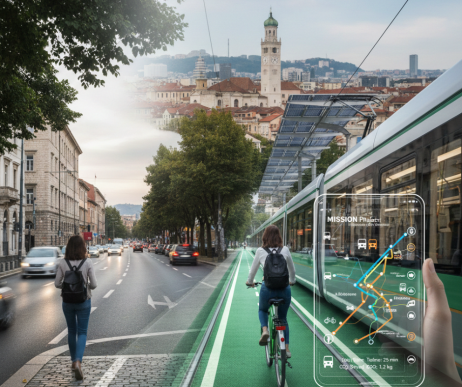
In contemporary cities, mobility is no longer defined by a single mode of transport. It is increasingly shaped by the ability to combine different modes in a seamless and efficient way. This approach is known as Intermodality, and it represents one of the most promising strategies for transforming urban mobility systems into more sustainable, inclusive, and resilient networks.
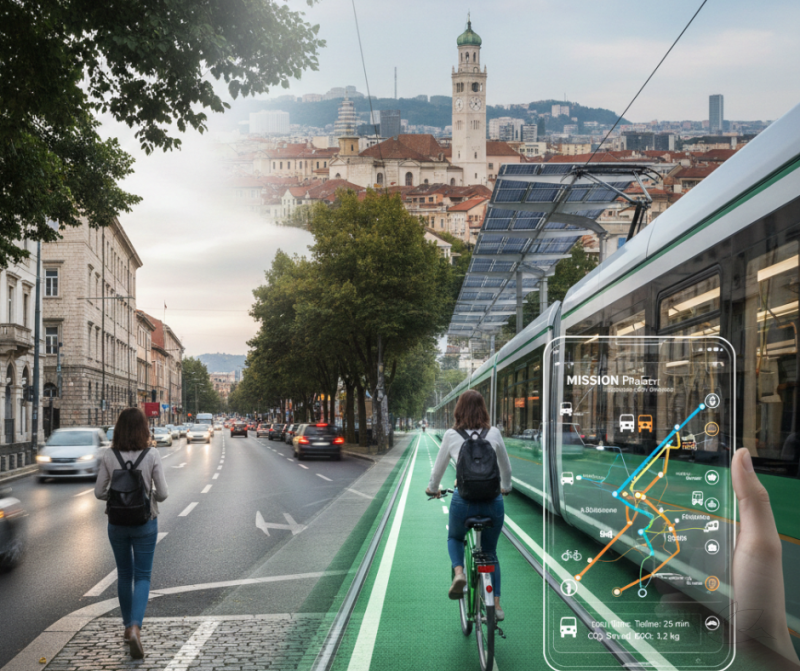
Intermodality refers to the use of two or more transport modes within the same journey. A person may begin by walking to a bus stop, continue by public transport, and complete the final stretch by bicycle or shared mobility service. Rather than relying exclusively on one mode, such as the private car, Intermodality encourages travelers to select the most appropriate option for each segment of their trip. The focus shifts from the vehicle itself to the traveller and the overall quality, efficiency, and sustainability of the journey.
How Intermodality Works in Practice
At its core, Intermodality is about integration. This integration operates at several levels. First, there is physical integration: transport hubs, stations, and urban spaces must be designed to allow smooth transitions between modes. When bus stops, rail stations, cycling paths, and pedestrian routes are spatially connected and accessible, transferring from one mode to another becomes intuitive rather than inconvenient. Urban design plays a decisive role in enabling this continuity.
Equally important is digital integration. Modern multimodal systems rely heavily on data and intelligent transport technologies that provide real-time information 24/7, route optimization, and personalized travel options. Digital platforms and mobile applications allow users to compare travel times, costs, and environmental impacts across different transport combinations. This technological layer transforms Intermodality from a theoretical concept into a practical daily solution. In this context, the idea of Mobility as a Service (MaaS) becomes particularly relevant, as it integrates multiple mobility services into a unified digital ecosystem.
Service integration further strengthens Intermodality. When payment systems, ticketing, and booking platforms are harmonized, the user experience becomes frictionless. A single digital interface can enable access to buses, trains, bike-sharing systems, and other services without requiring separate transactions. By reducing complexity, cities can remove one of the main barriers that discourage people from combining transport modes.
Why Intermodality Matters for Adriatic-Ionian Cities
Across the Adriatic-Ionian region, cities such as Maribor, Novi Sad, Sarajevo, and Podgorica face common challenges including congestion, air pollution, and a strong dependence on private vehicles. In many medium-sized urban areas, large-scale infrastructure investments such as metro systems are not feasible. Intermodality therefore offers a realistic and cost-effective pathway to optimize existing networks, enhance accessibility, and reduce environmental impact without relying solely on major infrastructure expansion.
The Role of MISSION in Promoting Intermodality
The MISSION project, funded by the Interreg IPA ADRION Programme, places Intermodality at the center of its strategy. By fostering cooperation among cities, research institutions, and mobility stakeholders, the project promotes innovative digital solutions and inclusive planning processes that encourage citizens to adopt more sustainable travel behaviors. Through smart tools, stakeholder engagement, and policy development, MISSION aims to strengthen the integration of public transport with cycling and walking networks, ultimately improving the overall travel experience.
A Strategic Vision for the Future of Urban Mobility
Intermodality represents a profound cultural shift in how mobility is perceived. Instead of ownership, it prioritizes access. Instead of isolated systems, it promotes interconnected networks. As cities continue to pursue climate neutrality and higher standards of urban livability, Intermodality emerges not only as a technical solution but also as a strategic vision for the future of urban mobility.
Contact information
Phone:
+381 21 420-066
Address:
Trg slobode 1
21101 Novi Sad
Republic of Serbia